

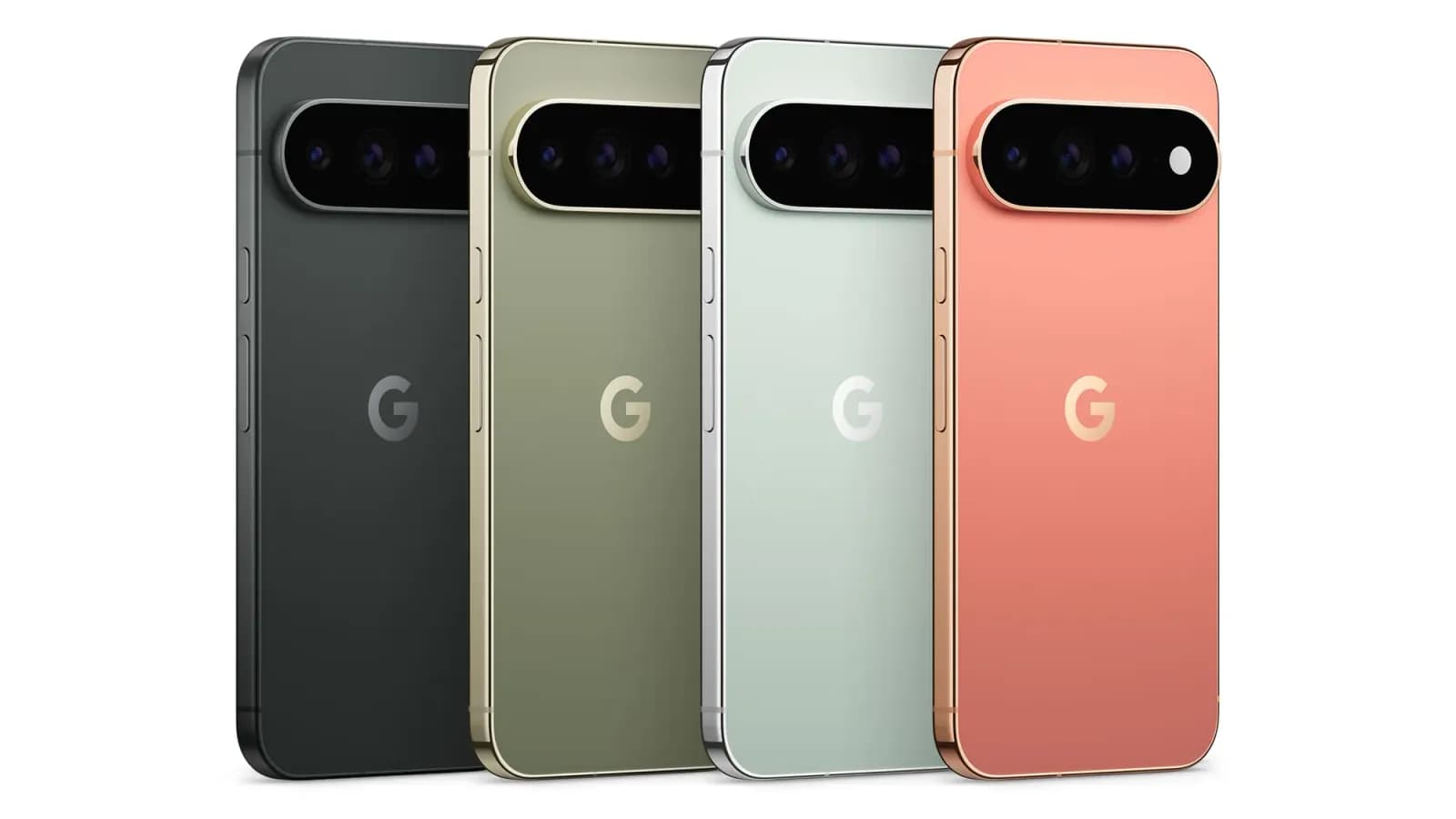
Google's official event is still a few hours away, but the company seems to have run out of patience and has already released all the details about the new generation of Pixel phones. This year’s lineup consists of the Pixel 11, Pixel 11 Pro, Pixel 11 Pro XL, and Pixel 11 Pro Fold, all built around the new Tensor G6 processor and Gemini Intelligence features.
I’ll admit that I’m also following this launch from a somewhat more personal perspective. I’ve been a Google Pixel user for many years—a phone that’s still quite niche in Romania, especially since the first models officially sold here didn’t arrive until 2024 with the Pixel 9 series. My first model was the Pixel 3 XL, followed by the Pixel 6 Pro and the Pixel 7 Pro, and last year I switched to the Pixel 10 Pro XL. That’s exactly why I had a few very specific things I was hoping to see improved this year.
In terms of design, Google isn't reinventing the Pixel series. The signature camera bar remains, but on the Pixel 11 it's 40% thinner, and with an official case, the phone should be almost completely flat. The Pixel 11 will be available in Pistachio, Hibiscus, Frost, and Obsidian, while the Pro models come in Canyon, Fog, Olive, and Obsidian.
The Pixel 11 Pro and Pro XL also feature the brightest Super Actua display Google has ever used, capable of reaching 3,600 nits, as well as a new protective layer that the company says offers more than twice the scratch resistance of the previous generation.
The Pixel 11 Pro Fold is also included. The new foldable phone is nearly 10% lighter and about one millimeter (yes, you read that right, one millimeter :D) thinner than the Pixel 10 Pro Fold; it features a new hinge and retains its IP68 rating. Google claims that the structural changes make it three times more durable than the previous generation, and both displays can now reach 3,600 nits. Inside, we find the same Tensor G6 and 16 GB of RAM.
An interesting new feature available on the Pro and Pro Fold models is HiLight. Google has integrated colored LEDs around the camera flash, which can indicate who’s calling when the phone is face down or display various animations when Gemini is listening, processing, or responding. It’s a simple idea, but I have to admit that it strikes me as one of the few new smartphone features in recent times that really piques my curiosity—yet at the same time, it disappoints me, as Google has limited this new feature’s functionality to calls from favorite contacts only, and not to notifications such as messages or alerts (perhaps in a future update, hopefully).
Google is once again promising better cameras
The cameras have always been one of the main reasons I've chosen Pixel phones, but Google has something to prove in this area this year.
The Pixel 11 features a new 48-megapixel main sensor with 56% improved light sensitivity, and the 5x telephoto camera can now reach 30x Super Zoom.
The Pixel 11 Pro and Pro XL models, however, get their own Pro Zoom feature with up to 130x magnification. I’m really curious to test it out, because the 100x Pro Zoom on the Pixel 10 Pro XL disappointed me. The AI processing was sometimes so aggressive that it introduced artifacts and details into the final photo that didn’t actually exist. I hope Google has improved the technology and that we’re not just getting a higher number achieved through even more AI.
Video recording also urgently needs attention. The Pixel 10 Pro XL remains, without a doubt, a very good phone for photography, but the video quality is, in my experience, far below what a premium flagship should offer in 2026. On paper, the camera upgrades in the Pixel 11 series look promising, but it remains to be seen whether Google has closed the gap with Samsung and Apple in this area as well.
The Pixel 11 Pro Fold also gets a new 48 MP main camera and a telephoto camera with up to 30x Super Zoom.
Tensor G6 and the battery
At the heart of all four phones is the Tensor G6, Google’s most powerful processor to date and the chip that powers the new Gemini Nano. Raw performance is important, especially since previous Tensor generations lagged behind the flagship processors offered by the competition, but personally, I’m even more interested in efficiency.
Google says the Tensor G6 is more efficient, and I’m hoping that will be most noticeable in the battery life. The Pixel 10 Pro XL doesn’t always last me through a full day when I’m using the phone a bit more intensively, which is hard to accept for a device of its size and price.
Google has also improved charging. The Pixel 11 and Pixel 11 Pro support Qi 2.2 at 25W, and the company claims that the Pixel 11 Pro XL can get up to 15 hours of battery life after just 15 minutes of wired charging. The Pixel 11 Pro Fold offers 30W wired charging, 25W wireless charging, and a claimed battery life of over 24 hours.
Pixel 11 Prices in Romania
Pixel phones are officially sold in Romania through eMAG and Vodafone, and the prices of the new generation confirm once again that Google is fully committed to the premium segment.
The Pixel 11 starts at 5,299.99 lei for the 256 GB model and goes up to 5,999.99 lei for the 512 GB model. The Pixel 11 Pro costs 6,329.99 lei for the 256 GB version and 6,999.99 lei for the 512 GB version; a 1 TB version is also available, priced at over 7,500 lei.
The Pixel 11 Pro XL starts at 7,399.99 lei for the 256 GB model, costs 8,099.99 lei for the 512 GB model, and reaches an impressive 9,499.99 lei for the 1 TB model.
And it’s precisely these prices that make me view the Pixel 11 series with a bit more scrutiny. I’ve been a big fan of Google phones and I’m still a Pixel user, but at over 7,000 lei for a Pro XL, we can no longer overlook the fact that the hardware performance, battery life, and video recording lag behind the competition just because the software experience and photos are so good.
On paper, the Pixel 11 seems to address exactly some of the weaknesses we encountered with the Pixel 10 Pro XL: a more efficient Tensor chip, improved cameras, and faster charging. Now we’ll have to see if these differences are noticeable in everyday use. Personally, I hope so, because I’d like my next phone to still be a Pixel.

Ruru
Founder of Newspigeon. I write about games, movies, TV shows, and technology.
Comments
Be the first to comment.